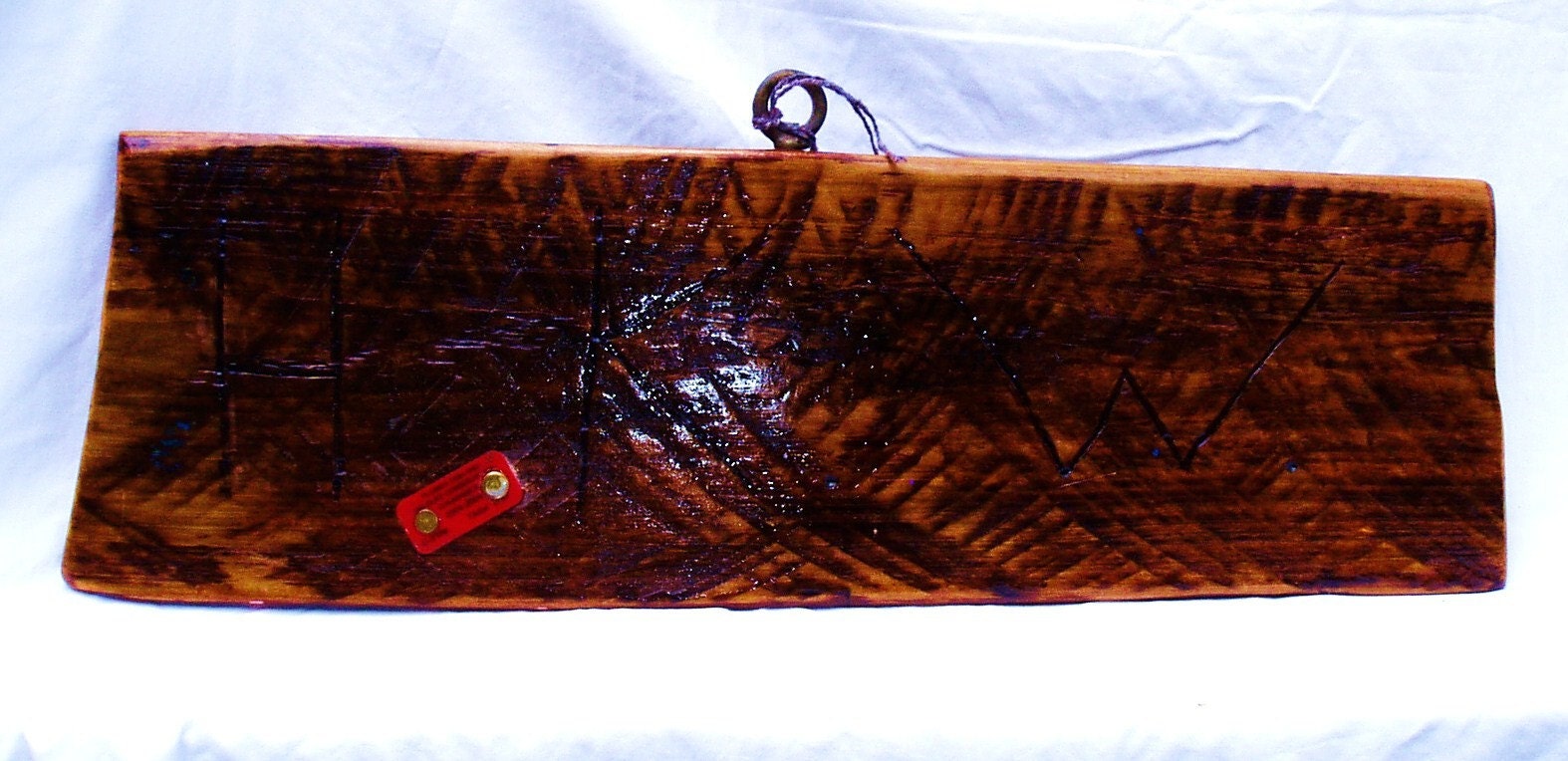
Reuse Became the way of life. To read the story from the inception of the Name Hong Kong Willie. Famed, by the humble statements from the Key West Citizen, viable art from reuse has found its time. To Live a life in the art world and be so blessed to make a social impact. Artists are to give back, talent is to tell a story, to make change. Reuse is a life experience
Authentic Key West influenced art. What once would have been sawdust spread to the wind, is now what you see here.
Superior reuse of materials.
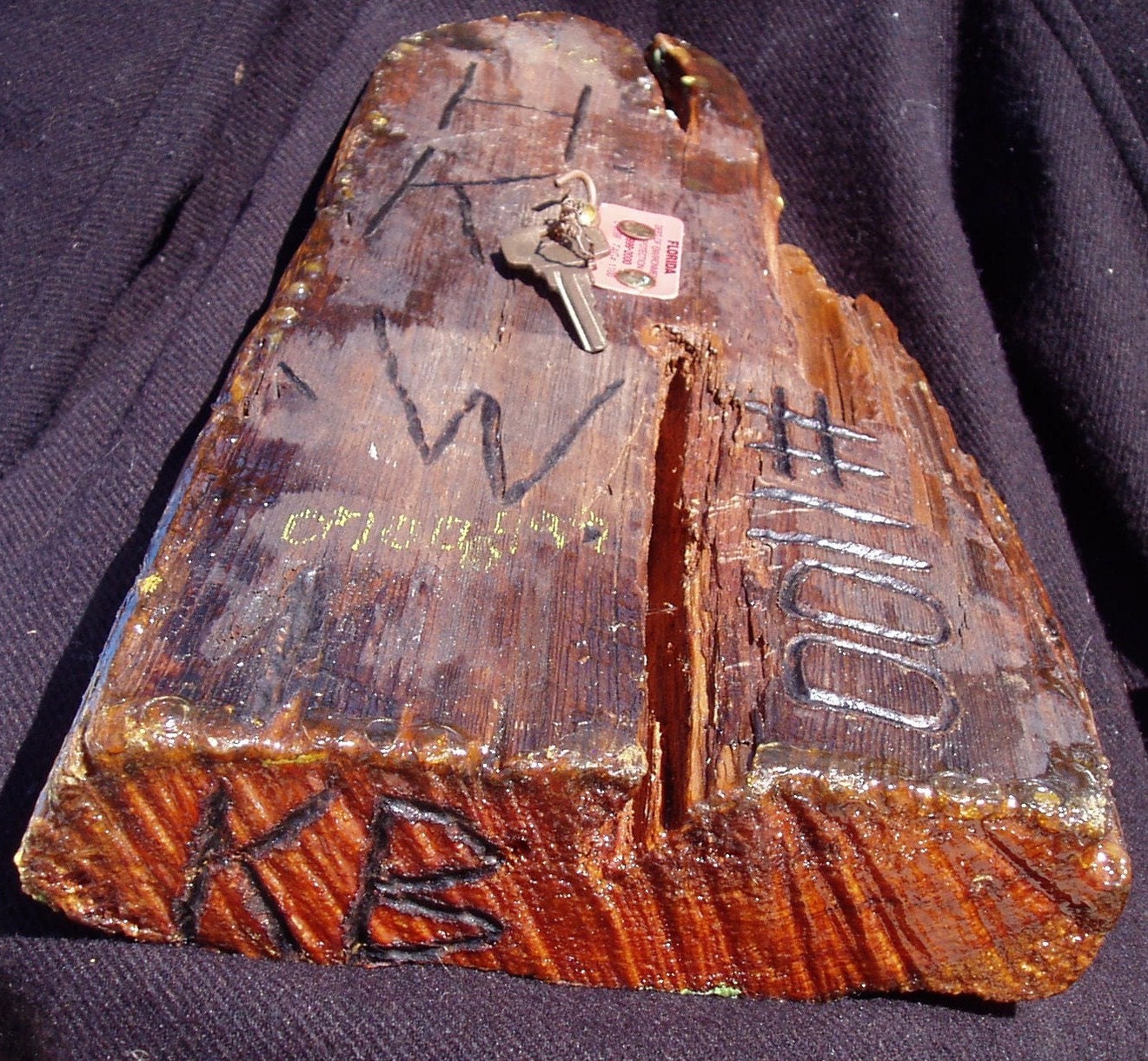
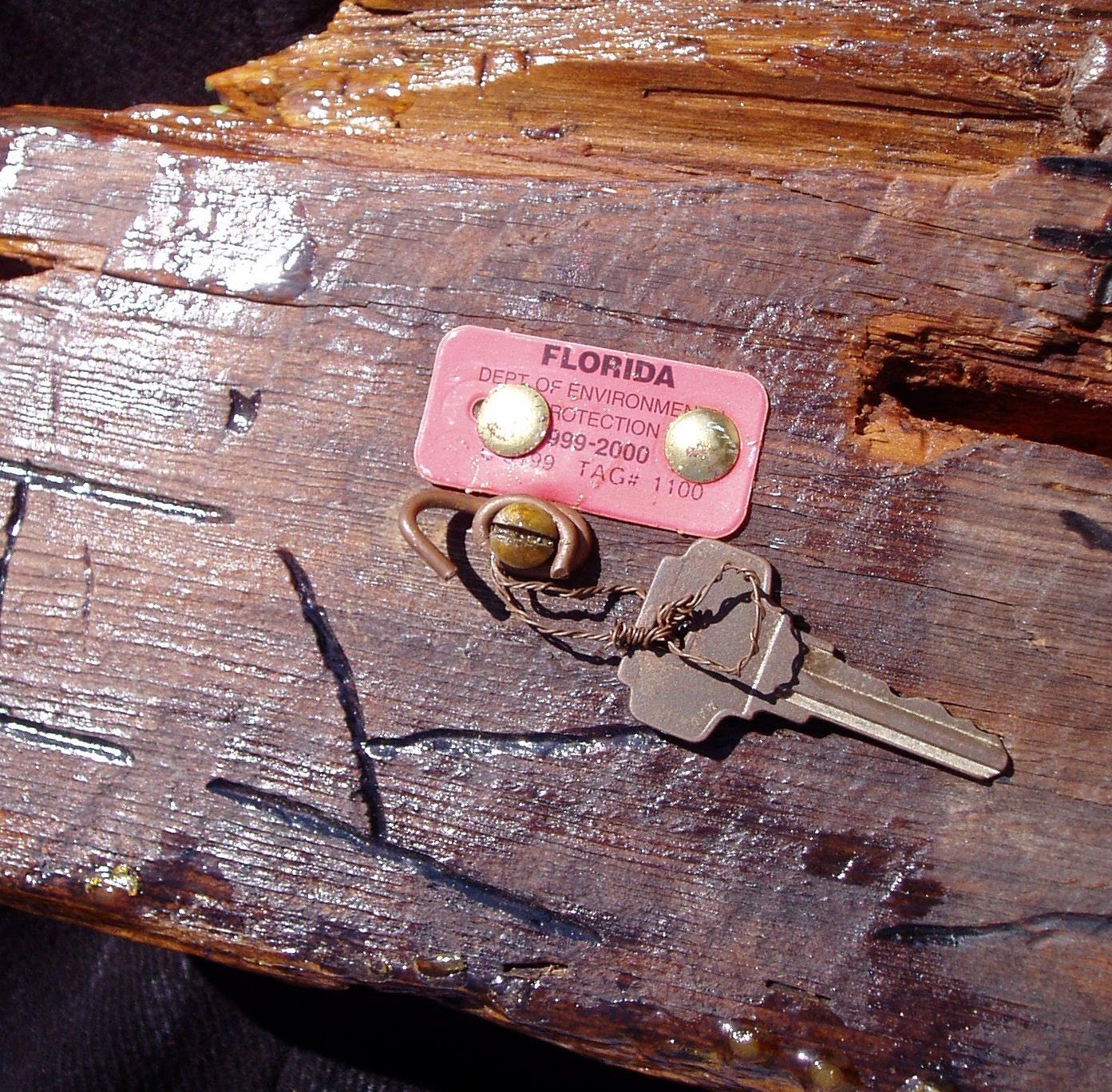
Wood Source: Aged Sawmill Stock
Copper Hanger Source: Reclaimed Wire
Backing Screw Source: Reclaimed Brass Screw
Key West Fisherman ID Tag Referenced in Artists Log Hong Kong Willie Artist: Kim Brown
By:
Chris Futrell, Florida Focus
TAMPA, Fla. – Have you ever seen the building on the corner of Fletcher and I-75 with a bunch of buoys strung everywhere? This small business that many think is an old bait n’ tackle shop is actually Hong Kong Willie.
Derek Brown, 26, and his family own and operate Hong Kong Willie. The little shop specializes in preservation art. The artists don’t take preservation too lightly either.
“99 percent of everything that has gone into a piece of art has been recycled and reused,” Brown said.
Just as unique as the art is, so is the company’s name. Brown says the name was created by his father, Joe Brown, in the 1950s.
“My father being in an art class, being affected by a teacher, they were melting Gerber baby food bottles," Brown said. "The teacher interjected that Hong Kong had a great reuse and recycling program even then.”
Brown's father then took that concept and later added the Americanized name Willie to the end. And that's how Hong Kong Willie was born as a location that offers recycling in a different and creative way.
Hong Kong Willie artists are what are known as freegans. Freegans are less concerned with materialistic things and more concerned about reducing consumption to lessen the footprint humans leave on this planet.
“I’m sure everyone has their own perception of a freegan, possibly jumping into a dumpster or picking up something on the side of the road,” Brown said. “There [are] people who will have excess. There [are] also things that can be trash to one man, but art or a prize to another man.”
Brown and his family carry this practice through to their art. It’s his family’s way of life, turning trash, which would otherwise fill up landfills, into an art form.
The Brown family gets a lot of their inspiration for their art from the Florida Keys. In fact, this is where the deluge of buoys wrapping around the ‘Buoys Tree’ came from, the fishermen of Key West.
“It is Styrofoam, we understand that it does not degrade, but to blame the fishermen for their livelihood wouldn’t be correct, instead we find a usage for those,” Brown said.
Brown said there’s a usage for everything, even the hooks to hold the painted driftwood, which are also salvaged, to the wall are old bent forks. Everything’s reused here. Purses made out of old coffee bean sacks to “kitschy,” as Brown described it, jewelry made from old baseballs.
“Hong Kong Willie truly believes that a piece, whether it’s a bag or a painted artwork, it’s meant for one person.”
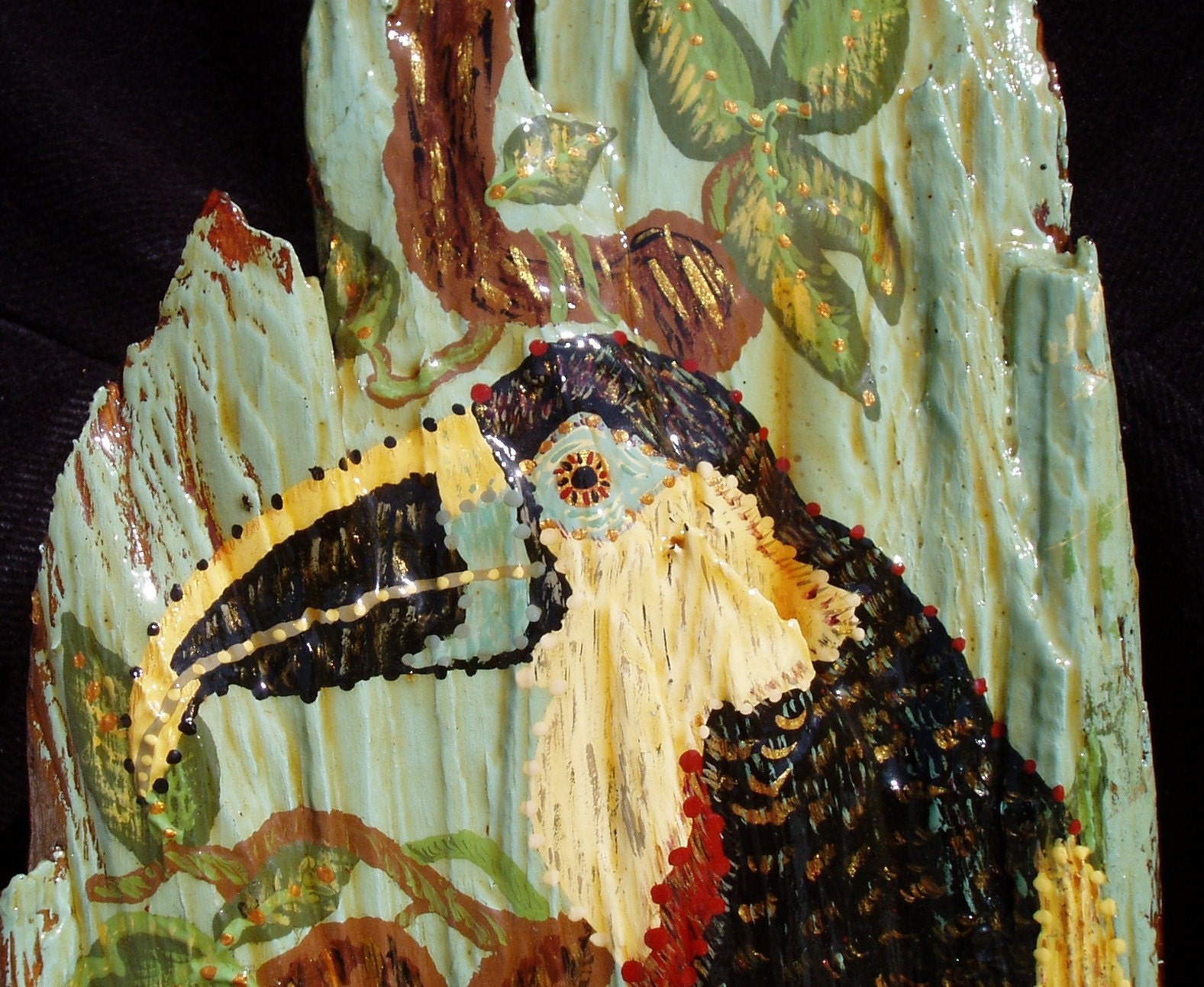
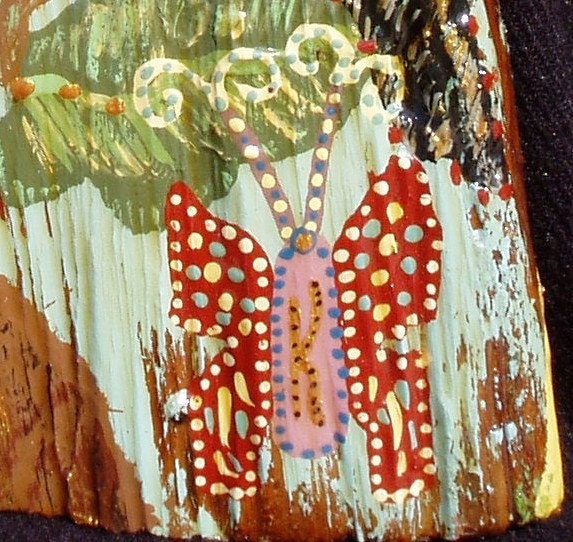
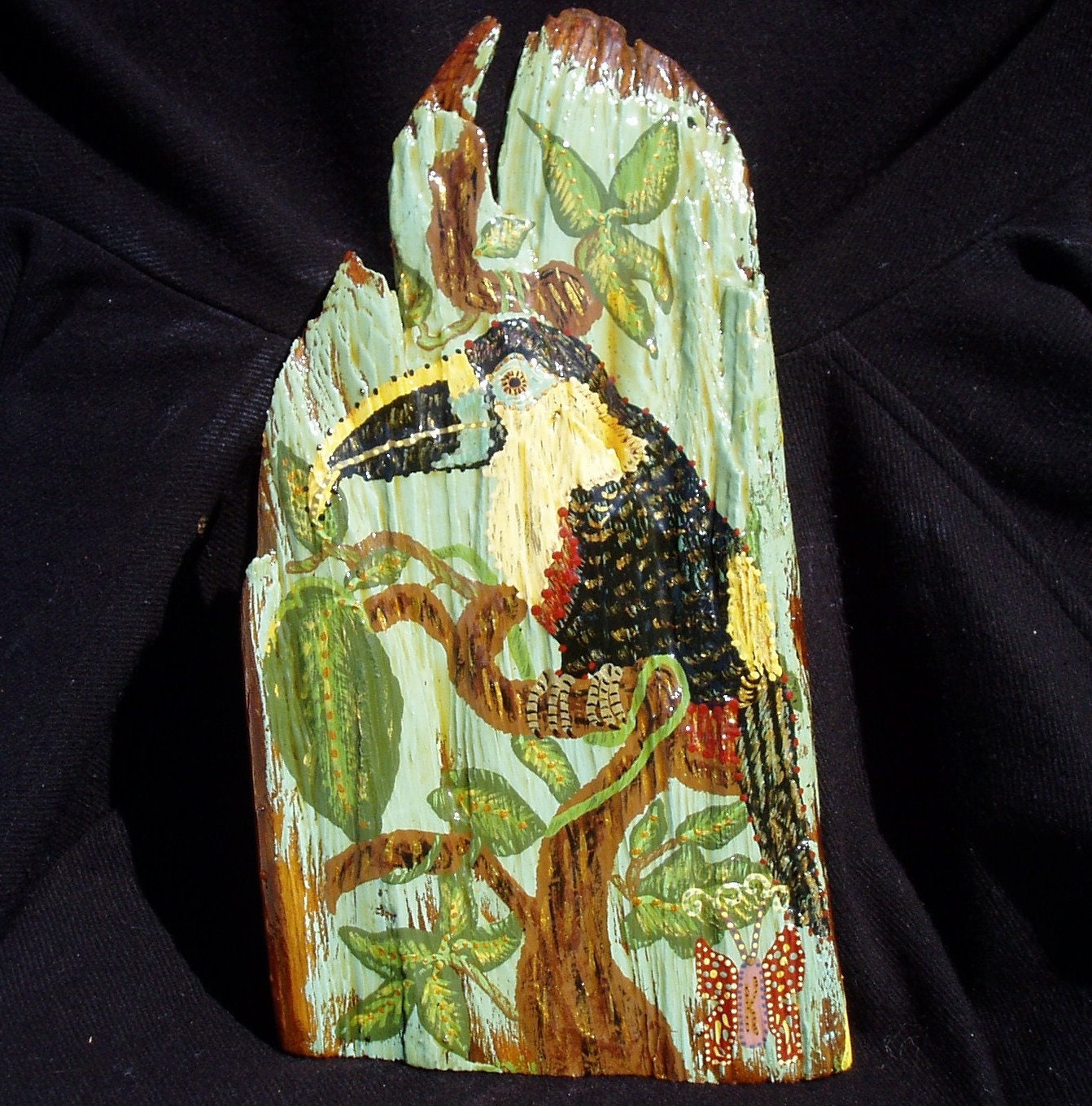
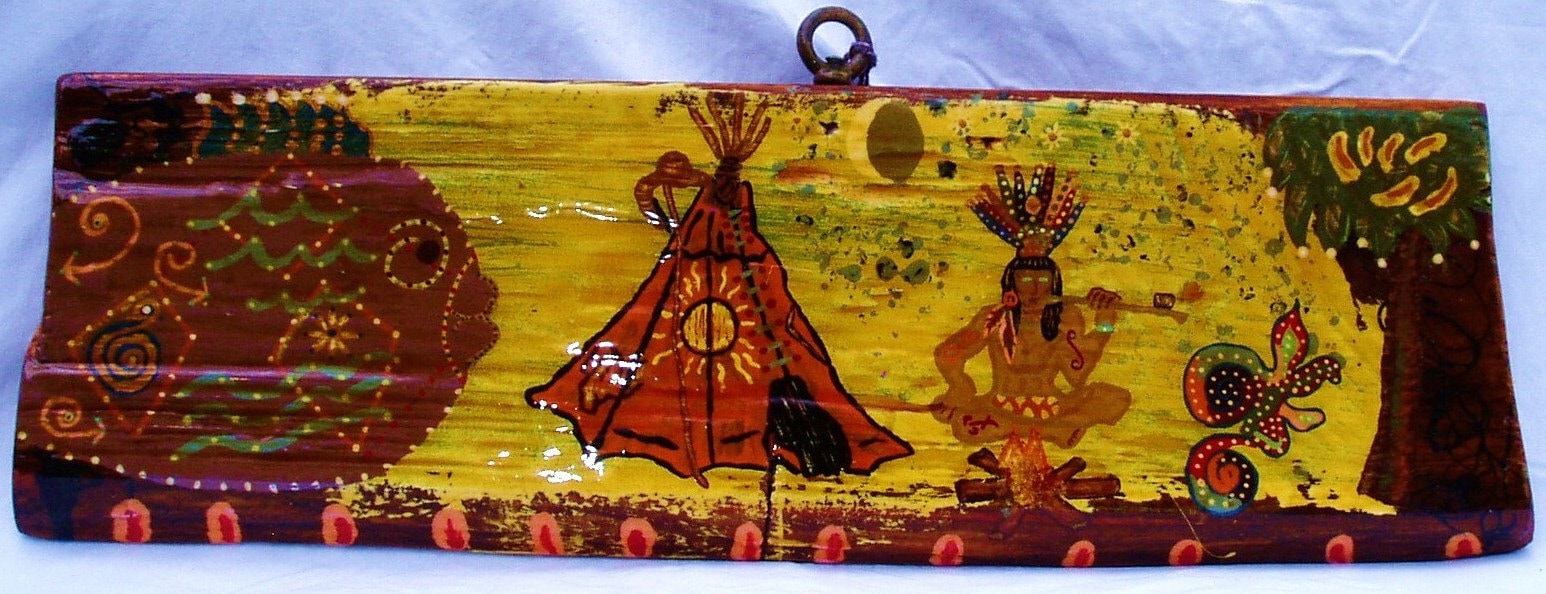
Indian Dreams - Hong Kong Willie - Original Art
Dimensions: 23" x 7" x 1"
Hong Kong Willie. The name of the artist. In 1958 his mother took Hong Kong Willie to an art class. The name started then. An art teacher when doing crafts out of Gerber baby bottles, made a statement, in Hong Kong reuse was common. At that time he thought this was very interesting. His father had low-land, at that time landfills were common also. The county had told Hong Kong Willie’s father, it was safe, but as we now know this was not so. Something can come from bad to be good. Hong Kong Willie the name came from that art teacher impressing on that young mind that objects made for one use could be for many other uses. Hong Kong for the neat concept. Willie for an American name. So for many years Hong Kong Willie had a life of reuse. Hong Kong Willie saw forms in a different light, His life now was meaningful, knowing this was and would be his life. Art made from found objects, making less of a footprint on this world. Art and art teachers, HOW IMPORTANT. For the ones that have, and the ones who have not. Media can be found. Now 50 years later, we know now being green is important. We need to look at this very carefully. Our children and our world need a different understanding. Objects can be used in many different ways. Hong Kong Willie the tons of objects in his life that have been used, without much change, So for that art teacher what she did for my life. Thank You. I still have the Gerber baby bottle till this day. Hong Kong Willie.
The Story Behind the Eye-Catching Art at I-75 Exit 266 Tampa Florida
Famous Florida Artist Joe Brown, better known as "Hong Kong Willie," makes art with a message at his home/studio near
I-75 Exit 266 Tampa Florida
Sometimes, it’s the smallest experiences that have the biggest impact on a person’s life. While
attending an art class in 1958 at the age of 8, Tampa folk artist Joe
Brown recalled being mesmerized by the lesson. It involved
transforming a Gerber baby bottle into a piece of art. “The Gerber bottle had no intrinsic value at all,” he said. “But when
(the instructor) got through with me that day, she made me see how
something so (valueless) can be valuable.” By the time class was over, Brown learned many other lessons, too,
such as the importance of volunteerism, recycling, reuse and giving back
to the community. He recalled being impressed by the teacher's
volunteer work in Hiroshima, Japan, helping atomic bomb survivors. "One of the last words she ever spoke to me about that was, ‘When I
left, I left out of Hong Kong,’ ” he said. After turning that over in
his young brain for awhile, he decided to use it in a nickname, adding
the name “Willie” a year later. You've probably seen Hong Kong Willie's eye-catching
home/gallery/studio at Fletcher Avenue and Interstate 75. But what is
the story of the man behind all those buoys and discarded objects turned
into art? Brown practiced his creative skills through his younger years. But as
an adult, he managed to amass a small fortune working in the materials
management industry. By the the '80s, he left the business world and
decided to concentrate on his art. He spent some years in the Florida
Keys honing his craft and building his reputation as a folk artist. He
also bought some land in Tampa near Morris Bridge Road and Fletcher
Avenue where he and his family still call home. Brown purchased the land just after the entrances and exits to I-75
were built. He said he was once offered more than $1 million for the
land by a restaurant. He turned it down, he said, preferring instead to
make part of the property into a studio and gallery for the creations he
and his family put together. And all of it is made of what most people would consider “trash.”
Pieces of driftwood, burlap bags, doll heads, rope — anything that comes
Brown’s way becomes part of his vocabulary of expression, and, in turn,
becomes something else, which makes a tour of his property somewhat of a
visual adventure. What at first seems like a random menagerie of glass,
driftwood and pottery suddenly comes together in one's brain to form
something completely different. One moment nothing, the next a powerful
statement about 9/11. One Man's Trash ... Trash? There is no such thing, Brown seems to say through his art. He keeps a blog about his art at hongkongwillie.blogspot.com. . In his shop, he has fashioned many smaller items out of driftwood,
burlap bags and other materials into signs, purses, totes, bird feeder
hangars and yard sculptures. He sells a lot to the regular influx of University of South Florida
parents and students every year who are are at first intrigued by the
“buoy tree” and the odd-looking building they see as they take Exit 266
off I-75. Brown Sells More Than Art Of course, the real locals know Brown’s place for the quality of his worms. If there’s one thing that Brown knows does well in the ground, it’s
the Florida redworm, something he enthusiastically promotes, selling the
indigenous species to customers for use in their compost piles. Some of
his customers say his worms are just as good at the end of a fishing
hook, though. “To be honest, what made me come here is that they had scriptures on
the top of his bait cans,” said customer John Brin. “Plus, they have
good service. They’re nice and they’re kind, and they treat you like
family.” Though Brin knows Brown sells them mostly for composting, he said
they are great for catching blue gill, sand perch and other local
favorites. He also added that he likes getting his worms from Brown
“because his bait stays alive longer than any other baits I’ve used.” For prices and amounts, he has another blog dedicated just to worms. Of course, many people also stop by to buy the smaller pieces of art
that he and his family create: purses made of burlap, welcome signs made
of driftwood, planters and other items lining the walls of his store. He’s also helped put his mark on the decor of local establishments too, such as Gaspar’s Patio, 8448 N. 56th st. Owner Jimmy Ciaccio said that when it came time to redecorate the
restaurant several years ago, there was only one person to call for the
assignment, and that was his good friend Brown. "I’ve known Joe all my life, and we always had a good chemistry
together,” Ciaccio said. "He’s very creative and fun to be around, and
that’s how it all came about.” Ciaccio says he still gets compliments all the time for the
restaurant’s atmosphere he created using the “trash” supplied by Brown.
He describes the style as a day at the beach, like a visit to Old Key
West. “They’re so inspired, they want to decorate their own homes this
way,” he said. It’s that kind of testimony that makes Brown feel good, knowing that
others, too, are inspired to create instead of throw away when they see
his work. He simply lets his work speak for itself. “Somebody once told me to keep telling the story and they will keep coming," he said, "and they always do."
Recycling as a Lifestyle and a Business
By:
Chris Futrell, Florida Focus
TAMPA, Fla. – Have you ever seen the building on the corner of Fletcher and I-75 with a bunch of buoys strung everywhere? This small business that many think is an old bait n’ tackle shop is actually Hong Kong Willie.
Derek Brown, 26, and his family own and operate Hong Kong Willie. The little shop specializes in preservation art. The artists don’t take preservation too lightly either.
“99 percent of everything that has gone into a piece of art has been recycled and reused,” Brown said.
Just as unique as the art is, so is the company’s name. Brown says the name was created by his father, Joe Brown, in the 1950s.
“My father being in an art class, being affected by a teacher, they were melting Gerber baby food bottles," Brown said. "The teacher interjected that Hong Kong had a great reuse and recycling program even then.”
Brown's father then took that concept and later added the Americanized name Willie to the end. And that's how Hong Kong Willie was born as a location that offers recycling in a different and creative way.
Hong Kong Willie artists are what are known as freegans. Freegans are less concerned with materialistic things and more concerned about reducing consumption to lessen the footprint humans leave on this planet.
“I’m sure everyone has their own perception of a freegan, possibly jumping into a dumpster or picking up something on the side of the road,” Brown said. “There [are] people who will have excess. There [are] also things that can be trash to one man, but art or a prize to another man.”
Brown and his family carry this practice through to their art. It’s his family’s way of life, turning trash, which would otherwise fill up landfills, into an art form.
The Brown family gets a lot of their inspiration for their art from the Florida Keys. In fact, this is where the deluge of buoys wrapping around the ‘Buoys Tree’ came from, the fishermen of Key West.
“It is Styrofoam, we understand that it does not degrade, but to blame the fishermen for their livelihood wouldn’t be correct, instead we find a usage for those,” Brown said.
Brown said there’s a usage for everything, even the hooks to hold the painted driftwood, which are also salvaged, to the wall are old bent forks. Everything’s reused here. Purses made out of old coffee bean sacks to “kitschy,” as Brown described it, jewelry made from old baseballs.
“Hong Kong Willie truly believes that a piece, whether it’s a bag or a painted artwork, it’s meant for one person.” twitpic.com/f7qq3
It was part of the beginning for the art support. A meeting place for the who's who in the world of the Keys. Egos left a the door.
Famous Key West Green Artist
A short moment of time Hong Kong Willie
The first time i can remember, The Florida Keys. The long road , narrow water on both sides. Beach, not to my understanding. Key West, Duval St, only what tourists see, was my first impression. WOW, that would change
i received a phone call from Al in Ramrod Key, a Florida Key. A Key that is about 27 miles from Key West. Al: a rocker, drummer, out there kind a guy. Al and i met in a funny way. Al living near some small town in Massachusetts also having this cool place in the Florida Keys. Artist have this draw to the Keys, Why, Well it took this road to discover. Al now living in Ramrod, calling to tell what had happen in the Isle of Ramrod. Not to mention Cat, oh i forgot, Cat is how i met Al.
Al, someone that, well to say what a friend. Some nights sleeping on his pool table. and not far is No Name Pub, well there you go, pub, by any other name spells trouble. Well contrary to your disbelief, what a place of history. This is where it begins.or When its begins.
This once remote Key, NO NAME KEY,NO NAME PUB, remote, to say the least, pub , when seeing the place, everything you can believe, and more, just from the appearance. Now no matter what you have heard second thoughts still occur.. Its still time turn around, not to night. The Rainbow Trail by Zane Grey, was spoken here, my first exposure to the days of Zane Grey, oh I'm getting ahead of myself. No Name Pub, a Zayne Grey second office in the Keys, later to be one of mine. No Name Pub, the history, the wild west, well, great writers, why they come here, No Name Pub. Real artist, Real Treasure hunters, Fisherman, and the trade no one saw, all came. No one made a big deal who came or left.
It was part of the beginning for the art support. A meeting place for the who's who in the world of the Keys. Egos left a the door. Appreciating that you did not get lost in that world . Artist that had made it and willing to give you support. . This was a place that I will always remember for the time I sharpen my artist skills..
You know you have seen it.
Whether you know it as “the Christmas tree” or the “art station,” Hong
Kong Willie’s is a spectacular, unique sight.
Seated in the corner of Morris Bridge and I-75, Hong Kong
Willie’s is a gallery where many unique pieces of art are displayed and
sold.
Always seeing this place on our way to school, former
Editor-in-Chief Pankti Mehta and I had wondered about it for a long
time. At the beginning of this summer, we decided to go there and find
out.
As we walked into the blue shack, we were greeted by a
friendly face. Wearing a blue Hawaiian shirt and khaki shorts, and with
his hair pulled back into a ponytail, Joe Brown, or more commonly known
as Hong Kong Willie, welcomed us and shared with us the story of his
life.
Hong Kong Willie is an artist who finds the meaning in
what others would deem as “junk” items. His journey began in his
childhood when he collected discarded items from the landfill where he
lived and sold them.
“By the time I was eight years old, I was walking around with hundreds of dollars in my pockets,” Brown said.
He had never thought he would enter the realm of art, but
his mother knew otherwise. She was the one who made him to go to art
school.
“My mother believed that if you were born to do something, you were to do that,” he said.
At art school, he met the person who would inspire his
nickname. His art teacher explained the importance and meaning behind
insignificant, common items to her students. She had gone to Hiroshima
shortly after the atomic bomb had been dropped, and then had left out of
Hong Kong. Her inspirational story was the reason Brown nicknamed
himself Hong Kong Willie.
When he was in college, the technological industry was
booming, with many new innovations coming out in different areas of
society. Brown decided to step into it. However, after being in the
technological industry for a while, Brown went through a realization:
“I just wasn’t made up for that.”
Knowing that the technological world was filled with
greed, Brown decided to step out of it in 1981. He knew that his life’s
calling was to be artist, and he was going to be just that.
“We are here to tell a story … to take common items that are not manufactured media that have a meaning.”
He set up his station first in the Florida Keys, but then moved to Tampa, where he has now been living for 37 years.
A firm believer in predestination, Brown explains that he got these beliefs from his father.
“My father understood why he was here. And he made that
of great importance to his children… My father gave me the understanding
of why we were here And to be determined to find that.”
In today’s fast-paced society, teaching of such life
lessons has become rare. People are more motivated to “get famous and
get money,” as Brown put it.
“I’m here just to exemplify and maximize why I’m here. That’s probably the greatest thing that I think is missed in families.”
Hong Kong Willie also explained one of his special
pieces to us, which was called Miriosity. Shaped like a bird, Brown used
the embedded frailties within the wood to bring out the meaning in the
piece.
“Many artists don’t produce more than one great, great,
great piece. And Miriosity, she just has all of those elements…
Miriosity has a great future.”
MYSTERIOSITY HONG KONG WILLIE ART, Famous Tampa + Florida Artist ,$176,000
Hong Kong Willie has supporters who come into his
gallery and buy many of his pieces. With the money that he makes, he
gives back a large portion to various social projects. His art is not
just a business, and he makes that very clear.
“You can only buy a piece of art if you have fallen in
love with it,” he said. He recalled a time when he turned down a buyer
from buying some of his works because he knew the reason for buying
those works was not genuine.
Hong Kong Willie keeps the presence of art alive in
today’s society. Wherever his art goes, a piece of him will forever be
with each piece. We are very grateful for his time and his dedication to
his work.
Black Bird Of Key Largo $ 98,000. Hongkongwillie Art, Famous Key West Green Artist
Famous Key West Green Artist
A short moment of time Hong Kong Willie
The first time i can remember, The Florida Keys. The long road , narrow water on both sides. Beach, not to my understanding. Key West, Duval St, only what tourists see, was my first impression. WOW, that would change
i received a phone call from Al in Ramrod Key, a Florida Key. A Key that is about 27 miles from Key West. Al: a rocker, drummer, out there kind a guy. Al and i met in a funny way. Al living near some small town in Massachusetts also having this cool place in the Florida Keys. Artist have this draw to the Keys, Why, Well it took this road to discover. Al now living in Ramrod, calling to tell what had happen in the Isle of Ramrod. Not to mention Cat, oh i forgot, Cat is how i met Al.
Al, someone that, well to say what a friend. Some nights sleeping on his pool table. and not far is No Name Pub, well there you go, pub, by any other name spells trouble. Well contrary to your disbelief, what a place of history. This is where it begins.or When its begins.
This once remote Key, NO NAME KEY,NO NAME PUB, remote, to say the least, pub , when seeing the place, everything you can believe, and more, just from the appearance. Now no matter what you have heard second thoughts still occur.. Its still time turn around, not to night. The Rainbow Trail by Zane Grey, was spoken here, my first exposure to the days of Zane Grey, oh I'm getting ahead of myself. No Name Pub, a Zayne Grey second office in the Keys, later to be one of mine. No Name Pub, the history, the wild west, well, great writers, why they come here, No Name Pub. Real artist, Real Treasure hunters, Fisherman, and the trade no one saw, all came. No one made a big deal who came or left.
It was part of the beginning for the art support. A meeting place for the who's who in the world of the Keys. Egos left a the door. Appreciating that you did not get lost in that world . Artist that had made it and willing to give you support. . This was a place that I will always remember for the time I sharpen my artist skills..
You know you have seen it.
Whether you know it as “the Christmas tree” or the “art station,” Hong
Kong Willie’s is a spectacular, unique sight.
Seated in the corner of Morris Bridge and I-75, Hong Kong
Willie’s is a gallery where many unique pieces of art are displayed and
sold.
Always seeing this place on our way to school, former
Editor-in-Chief Pankti Mehta and I had wondered about it for a long
time. At the beginning of this summer, we decided to go there and find
out.
As we walked into the blue shack, we were greeted by a
friendly face. Wearing a blue Hawaiian shirt and khaki shorts, and with
his hair pulled back into a ponytail, Joe Brown, or more commonly known
as Hong Kong Willie, welcomed us and shared with us the story of his
life.
Hong Kong Willie is an artist who finds the meaning in
what others would deem as “junk” items. His journey began in his
childhood when he collected discarded items from the landfill where he
lived and sold them.
“By the time I was eight years old, I was walking around with hundreds of dollars in my pockets,” Brown said.
He had never thought he would enter the realm of art, but
his mother knew otherwise. She was the one who made him to go to art
school.
“My mother believed that if you were born to do something, you were to do that,” he said.
At art school, he met the person who would inspire his
nickname. His art teacher explained the importance and meaning behind
insignificant, common items to her students. She had gone to Hiroshima
shortly after the atomic bomb had been dropped, and then had left out of
Hong Kong. Her inspirational story was the reason Brown nicknamed
himself Hong Kong Willie.
When he was in college, the technological industry was
booming, with many new innovations coming out in different areas of
society. Brown decided to step into it. However, after being in the
technological industry for a while, Brown went through a realization:
“I just wasn’t made up for that.”
Knowing that the technological world was filled with
greed, Brown decided to step out of it in 1981. He knew that his life’s
calling was to be artist, and he was going to be just that.
“We are here to tell a story … to take common items that are not manufactured media that have a meaning.”
He set up his station first in the Florida Keys, but then moved to Tampa, where he has now been living for 37 years.
A firm believer in predestination, Brown explains that he got these beliefs from his father.
“My father understood why he was here. And he made that
of great importance to his children… My father gave me the understanding
of why we were here And to be determined to find that.”
In today’s fast-paced society, teaching of such life
lessons has become rare. People are more motivated to “get famous and
get money,” as Brown put it.
“I’m here just to exemplify and maximize why I’m here. That’s probably the greatest thing that I think is missed in families.”
Hong Kong Willie also explained one of his special
pieces to us, which was called Miriosity. Shaped like a bird, Brown used
the embedded frailties within the wood to bring out the meaning in the
piece.
“Many artists don’t produce more than one great, great,
great piece. And Miriosity, she just has all of those elements…
Miriosity has a great future.”
MYSTERIOSITY HONG KONG WILLIE ART, Famous Tampa + Florida Artist ,$176,000
Hong Kong Willie has supporters who come into his
gallery and buy many of his pieces. With the money that he makes, he
gives back a large portion to various social projects. His art is not
just a business, and he makes that very clear.
“You can only buy a piece of art if you have fallen in
love with it,” he said. He recalled a time when he turned down a buyer
from buying some of his works because he knew the reason for buying
those works was not genuine.
Hong Kong Willie keeps the presence of art alive in
today’s society. Wherever his art goes, a piece of him will forever be
with each piece. We are very grateful for his time and his dedication to
his work.